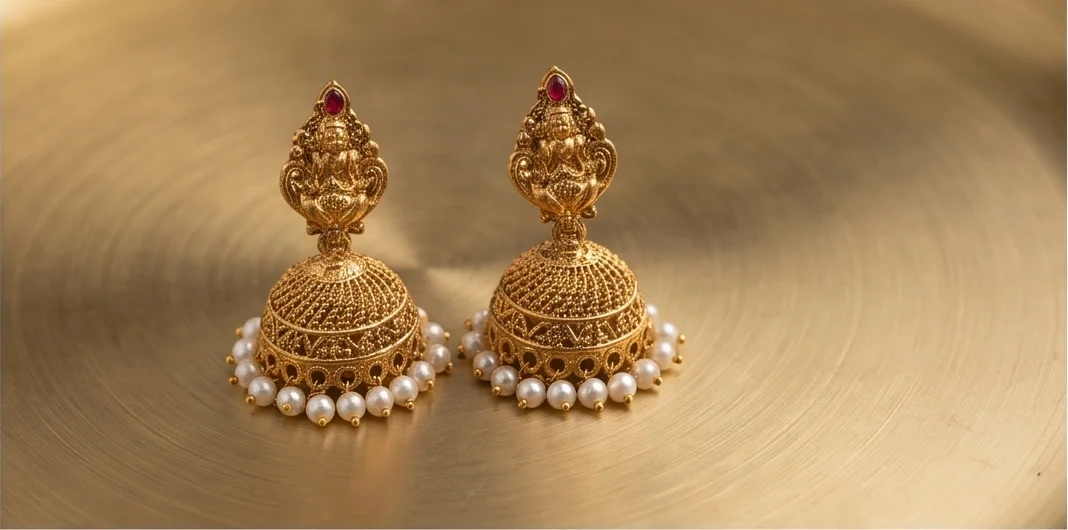
Antique gold is the most sought-after finish in wholesale imitation jewellery. Unlike bright, mirror-polished gold plating, the antique finish delivers a warm, aged patina that evokes heritage craftsmanship — the kind of look that makes a piece feel like it has been passed down through generations. But achieving that look at scale, consistently and durably, is an exacting industrial process. Here is how it works at Jagruti Imitation Jewellery.
Stage 1 — Surface Preparation
Every casting arrives at the plating line with micro-residue from the mould release, polishing compound, and handling. We begin with an alkaline degreasing bath at 60–70 °C to strip all oils and waxes. This is followed by an acidic pickling dip (dilute sulphuric or hydrochloric acid) to remove surface oxides and micro-scale from the casting. The piece is then rinsed in deionised water and inspected under magnification — any surface imperfection at this stage will telegraph through every subsequent layer. The base metal is most often brass for heavier traditional pieces or Mazak (zinc alloy) for intricate lightweight work, as used across our wholesale product range.
Stage 2 — Copper Flash (Adhesion Layer)
A thin copper flash layer is electrodeposited directly onto the cleaned base. This serves two critical purposes: it creates a molecular-level bond between the base metal and the gold layers to follow — dramatically improving adhesion and preventing peeling — and it provides a uniform, conductive substrate that evens out minor surface irregularities from casting. The copper bath is typically a cyanide-based alkaline solution operated at 2–4 volts for 30–90 seconds. The result is a rose-pink film no thicker than 1–2 microns, but it is the foundation on which everything else depends.
Stage 3 — Gold Electroplating Bath
This is where the visible gold colour is built. We use a 14K–18K gold cyanide bath — the exact karat and alloy composition (gold-copper-silver) determined by the desired shade. For antique finishes, a slightly warmer tone with a higher copper fraction in the alloy is preferred, as it complements the oxidation that follows. Plating runs at 3–6 volts with controlled current density, building a gold layer of 0.5 to 3 microns depending on the product grade. Pieces are suspended on copper-wire racks or barrel-plated for smaller findings. The bath temperature, pH, and gold concentration are continuously monitored — a 1% drift changes colour perceptibly.
Stage 4 — Antique Oxidation Wash
This is the defining step that separates antique gold from bright gold. The plated piece is dipped into a liver-of-sulphur (potassium sulphide) solution — sometimes blended with ammonium sulphide for specific patina tones. The sulphides react with the copper content in the gold alloy, selectively darkening recessed areas while leaving raised surfaces lighter. Timing is measured in seconds: too short and the contrast is weak; too long and the piece goes black. Immediately after the desired depth is reached, the piece is quenched in cool deionised water to halt the reaction. Skilled operators then use soft brass-wire brushes or pumice slurry to relieve the highlights — polishing the raised motifs back to a warm glow while leaving the recessed areas richly darkened.
Stage 5 — Tarnish-Resistant Clear Sealant
The final stage locks everything in. We apply a transparent electrophoretic lacquer (E-coat) — a uniform, pinhole-free clear coat deposited by immersing the piece in a bath of charged polymer particles and applying DC current. The coating is typically 5–10 microns thick, completely transparent, and UV-stabilised. It seals the antique finish against sweat, humidity, perfume, and atmospheric sulphur compounds — the primary causes of tarnish in gold-plated jewellery. The piece is then oven-cured at 120–140 °C for 20–30 minutes to cross-link the polymer. The end result is a finish that stays rich and untarnished through years of retail display and customer wear.
Antique vs Bright Polish: When to Choose Which
Bright gold plating is polished to a mirror finish and lacquered clear — ideal for contemporary, minimalist designs and lightweight daily-wear pieces. But antique gold commands higher perceived value in the wholesale market. It photographs better (no glare hotspots), hides minor casting imperfections, and aligns with the heritage aesthetic that dominates bridal, temple, and traditional segments. For retailers, antique-finish pieces typically sell at a 15–25% premium over equivalent bright-plated designs. They also show less visible wear over time since small scratches blend into the existing patina rather than standing out against a flawless mirror surface.
Durability and Care Tips for Retailers
With the E-coat sealant in place, our antique gold pieces are highly durable — but they are not indestructible. Advise your customers to avoid direct contact with alcohol-based perfumes, hairspray, and chlorinated water. Store pieces in individual soft pouches rather than loose in a drawer where rubbing can micro-abrade the lacquer. If tarnish does eventually appear (typically after 2–3 years of heavy wear in humid climates), a gentle wipe with a dry microfibre cloth is usually enough to restore the lustre. We do not recommend commercial jewellery dips — they can strip the antique oxidation layer.
Plating at Scale: Inside Our Mumbai Workshop
At Jagruti Imitation Jewellery, our Kandivali East facility runs 12 dedicated plating lines with barrel and rack capability, capable of processing thousands of units per batch. Every stage is quality-controlled: pH and gold-concentration titrations run hourly, bath temperatures are digitally logged, and the antique wash timing is standardised per design. A dedicated QC inspector samples every batch under a 10× stereo microscope before the pieces proceed to assembly and packing. This is how we maintain finish consistency across orders ranging from 50 pieces for a boutique retailer to 5,000 pieces for a multi-city distributor. Learn more about our manufacturing setup or browse the full wholesale catalogue.
Whether you stock temple haarams, bridal chokers, or traditional jhumkas — the antique gold finish is what gives each piece that unmistakable heirloom quality. If you are a retailer, distributor, or exporter looking for consistent, high-quality plated imitation jewellery at wholesale scale, get in touch with our trade desk to discuss your requirements.
Questions about our plating process? Ask our team.
Contact the Workshop →